Insights · Small business & hospitality
Goliath Over 2.3%: What Foucault Can Tell Us About the ATO’s Credit Card Ban
Credit cards make up 2.3% of what the ATO collects, yet it is holding firm on dropping them. David Lee reads the decision through Michel Foucault's ideas on power, and through his own BAS bills.
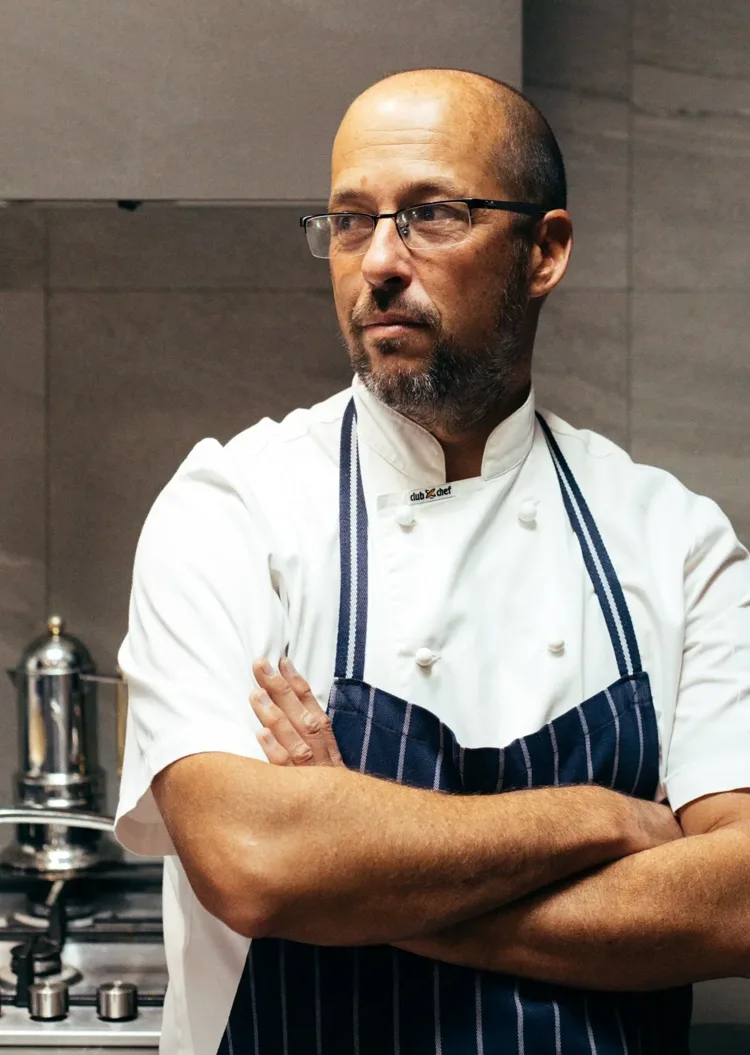
By David Lee9 October 2026 · 5 min read

Why fight so hard over so little?
This week I sat down with ABC News to talk about the ATO’s decision to stop accepting credit cards after 30 November. It was a good conversation. But one number kept nagging at me on the drive home.
2.3%.
That’s the share of tax collections paid by credit card, by the ATO’s own figures. A fraction of a fraction of what the Tax Office brings in each year. So here’s the question I couldn’t shake: why would the most powerful revenue agency in the country dig in this hard over something this small?
I think the answer has very little to do with money. And a French philosopher who died more than forty years ago explains it better than any press release.
The puzzle
From 1 October, the Reserve Bank’s ban on card surcharges took effect. The policy was sold as a win for consumers: no more surprise fees at the register. Every café, caterer and corner store now has to absorb its card fees or bury them in its prices.
The ATO looked at the same choice and picked a third option nobody else gets. It simply stopped taking credit cards.
Then business groups pushed back. The ATO called a meeting, listened to the concerns, and changed nothing.
To be fair, the ATO has a case. The Commissioner says absorbing merchant fees would shift a cost from the person choosing to pay by card onto the whole community. That’s a reasonable principle. It’s also exactly the principle small business was just told it isn’t allowed to apply.
And it’s hard to see it as a money decision. The cost is small against total collections, and the agency already runs at a scale where it could be negotiated, absorbed or funded. So if money isn’t driving this, what is?
Enter Foucault
Michel Foucault spent his career asking one question: how does power actually work? His answer was surprising. Power isn’t mostly about money or force. It’s about control, and above all the authority to define what counts as true, normal and good for us.
In Foucault’s view, modern institutions don’t rule by decree. They rule by setting the terms. They decide what the problem is, what the sensible answer looks like, and who gets to say so. He called this governmentality: the quiet art of managing a population through rules, categories and official knowledge.
Read the credit card decision through that lens and the puzzle starts to dissolve. The government didn’t just pass a payments rule. It announced a truth: surcharge-free is good for consumers. Once that truth is set, every institution tied to it has a stake in keeping it true.
Backing down would mean conceding the reform has a cost the government itself won’t carry. That’s not a 2.3% problem. That’s a problem for the authority to say what’s good for us.
One important point, and Foucault would insist on it. This isn’t about a villain in a corner office. It’s institutional logic. Nobody has to decide to protect the narrative. The system protects itself.
The statistic that does the talking
Foucault’s sharpest idea is what he called power-knowledge. Those with power don’t just use facts. They produce the facts that make their power look natural and fair.
Watch it work here. The ATO’s defence leans on one number: more than 60% of credit card payments by value come from privately owned and wealthy groups, public companies and multinationals. Only around 5% of small businesses paid their tax by card.
The message is clear. This only touches the big end of town. Nothing to see here.
But look at two words: by value. Value isn’t people. One multinational’s single enormous payment can outweigh thousands of small ones. The other 40% by value is where the sole traders, the cafés and the mum and dad operators live, and there could be a great many of them. And 5% of all small businesses in this country is still a lot of people at the kitchen table at BAS time.
The number isn’t false. It’s chosen. It frames the decision as fairness to the community, when for the people inside that 40% it’s the removal of a lifeline. That’s power-knowledge in action: not lying, but deciding which truth gets told.
Back on the ground
Philosophy is all well and good. Here’s what it looks like from my side of the counter.
I’ve been forced, more than once, to pay my ATO bill on a credit card. Not for points. Because the cash wasn’t there yet. One week a big insurance bill and a dead commercial dishwasher landed at the same time. Invoices were still out. Then the BAS fell due on top. The card was the bridge between what I owed and what I was owed.
That’s the reality for thousands of small operators right now. Margins are thin, costs keep climbing, and cash flow isn’t a convenience. It’s survival.
This is the asymmetry Foucault helps us see. On one side, an institution with every resource in the country, no cash flow problem of its own, and the power to set the rules. On the other, a business owner juggling timing gaps to stay afloat. The party with every option has just removed an option from the party with almost none.
It’s David and Goliath. And I don’t say that lightly, given my name.
Never about the money
Let me be clear about one thing. The ATO is acting lawfully. Nobody is obliged to accept a credit card, the Tax Office included. That’s not the scandal.
The scandal is that it’s lawful. The rules were written in a way that left the government an exit no small business gets. Merchants must swallow the cost. The government’s own agency walks away from it.
So this was never about 2.3%. It’s about three things: power, control, and not losing face on a policy sold as good for us. Foucault would recognise it instantly. An institution defending not a sum of money, but its authority to define what’s fair.
And as always, the cost doesn’t disappear. It lands on the people with the least power to push it anywhere else.
Which leaves one question I’d like every policymaker to sit with: what does it say about a government when being right matters more than being fair?
Hear from David first
Notes on hospitality and small business, new writing, and where I'm speaking next.